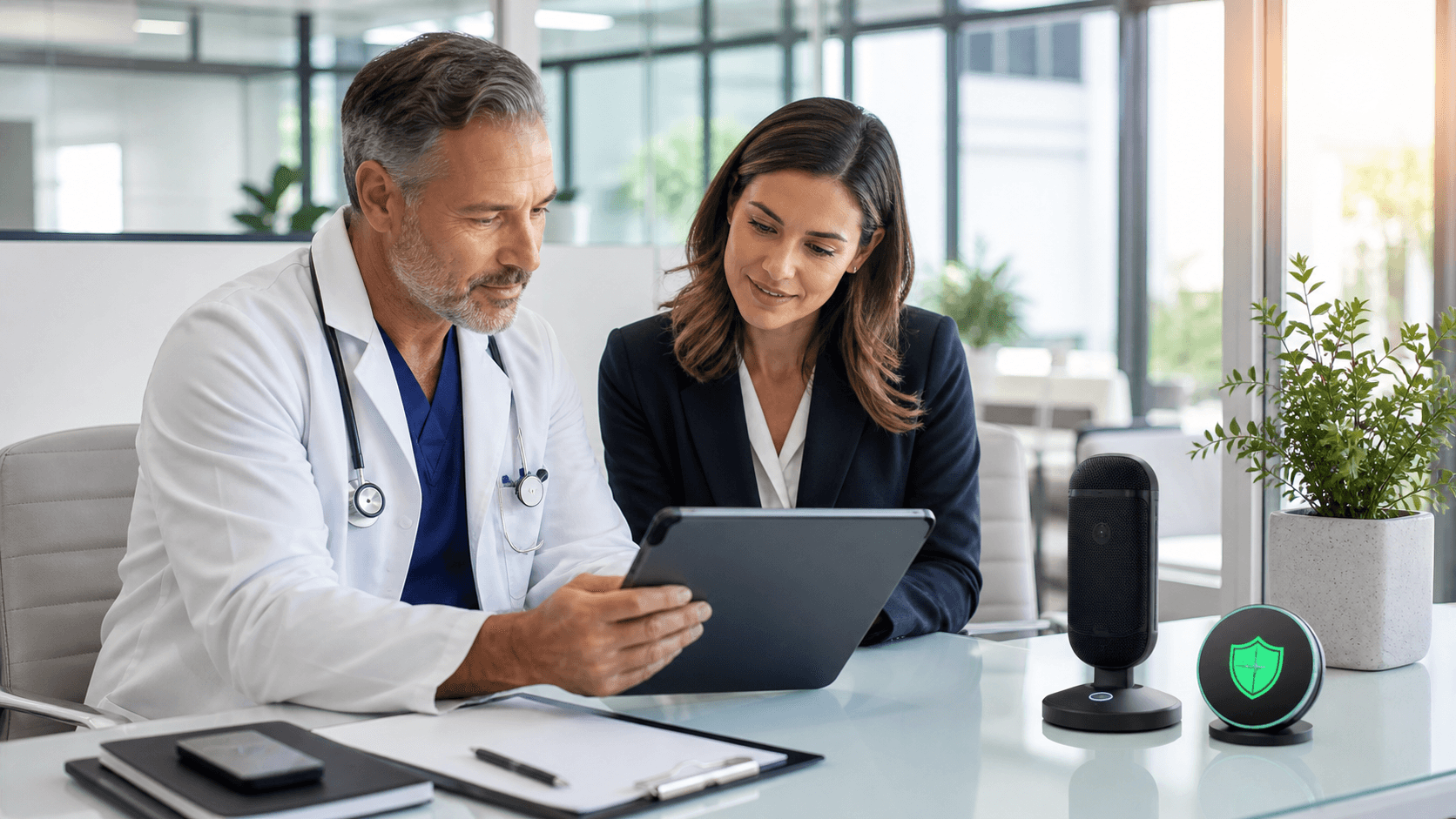
Workflow Automation Vs. Continuous Monitoring In Healthcare
Better workflows should never mean less oversight. As healthcare leaders look for ways to ease documentation demands, they also need clear visibility into patient privacy, medication security, and compliance concerns. We help organizations understand how healthcare workflow automation software and continuous monitoring can work side by side instead of pulling priorities in opposite directions.
Automation helps clinicians and staff spend less time on repeatable administrative work. Monitoring helps privacy, pharmacy, compliance, and security teams spot activity that deserves a closer look. With Microsoft Dragon Copilot, Haystack iS, and DetectRx, we support a connected approach to documentation efficiency, privacy oversight, and controlled-substance monitoring.
Separate Automation From Continuous Monitoring
Healthcare workflow automation software helps standardize or speed up repeatable tasks. In clinical documentation, that can mean reducing the effort involved in creating notes and meeting documentation requirements. The point is not simply to work faster. It is to create workflows that are easier to use and better support patient care.
Continuous monitoring has a different job. It reviews activity over time to identify patterns, unusual behavior, or possible concerns that may need review. Manual audits still have a place, but they can only show so much when records, medication activity, and user access are spread across many systems and teams.
Together, these tools support different parts of a safer operation:
- Automation reduces repetitive documentation work for clinicians.
- Privacy monitoring helps teams review potentially inappropriate record access.
- Drug diversion monitoring helps surface controlled-substance activity for investigation.
- Clear review processes help organizations respond fairly and consistently.
When we separate these functions, it becomes easier to see where your organization faces workflow friction and where it may need stronger risk visibility.
Automate Documentation with Microsoft Dragon Copilot
Microsoft Dragon Copilot supports more efficient clinical documentation through AI-supported and speech-enabled workflows. By helping clinicians capture relevant clinical details with less manual effort, it can reduce the burden of documentation and give more attention back to the patient encounter.
Technology works best when it fits the real pace of clinical work. That is why we focus on expert-guided implementation, workflow configuration, user education, and practical support. A documentation solution should feel like a useful part of the day, not another administrative step layered onto an already full schedule.
Clinical judgment remains at the center of the documentation process. We view automation as support for the clinician, who reviews, refines, and finalizes the record. When implemented thoughtfully, healthcare workflow automation software can help create more timely, complete documentation while easing repetitive work.
Monitor Privacy Risks with Haystack iS
Patient records must be available to people who need them for care, operations, and administrative responsibilities. That access is necessary, but it can also make potentially inappropriate activity hard to spot without focused oversight. Haystack iS helps organizations monitor access patterns involving sensitive patient information.
Instead of depending only on limited retrospective audits, privacy teams can use monitoring to focus attention where risk signals appear strongest. A flagged activity pattern is not proof of wrongdoing. It is a reason to review the context, follow established procedures, and make a fair determination.
We often recommend building a clear process around privacy monitoring, including:
- Reviewing flagged access activity in context.
- Documenting investigation steps and findings.
- Following appropriate escalation paths.
- Using recurring concerns to guide policy updates or staff education.
This approach supports a more proactive compliance posture while helping protect the trust patients place in their healthcare organizations.
Uncover Diversion Signals with DetectRx
Controlled-substance activity can move through complicated clinical, pharmacy, and operational workflows. Because the information is often distributed, potential diversion signals may be difficult to recognize through occasional reviews alone. DetectRx helps organizations monitor controlled-substance activity patterns that may warrant investigation.
Ongoing analysis can help teams identify unusual activity earlier and bring the right people into the review process. As with privacy monitoring, a signal should lead to careful evaluation, not assumptions based on one alert or data point. Fair, evidence-based investigation processes matter for patients, employees, and the organization.
DetectRx can also support collaboration among pharmacy, compliance, security, risk, and clinical leaders. Clear escalation paths and well-documented findings help teams address concerns responsibly while supporting medication stewardship, patient safety, employee well-being, and accountability.
Build a Connected Plan for Fall Readiness
Late summer and fall are a practical time to review where manual work slows clinicians down and where limited oversight may leave gaps. We encourage leaders to look at documentation workflows, privacy review processes, and controlled-substance monitoring as connected parts of everyday operations.
Automation and continuous monitoring serve different purposes, but both support safer, more resilient care. A thoughtful plan aligns technology with clinical workflows, compliance processes, defined responsibilities, and measurable organizational priorities.
Make Critical Workflows Easier to Manage
At Dictation Direct, we help healthcare organizations address privacy monitoring, clinical documentation, and drug diversion oversight with practical technology solutions. Learn how our healthcare workflow automation software can support the work your teams handle every day. Sign up for a consultation today to discuss the needs and capabilities most relevant to your organization.